



The AI Boom Is Spending Real Money Before Proving Real Returns
Big tech is pouring hundreds of billions into AI infrastructure. Users are arriving fast, investors are excited, and data centers are multiplying. The harder question is whether the returns can catch...
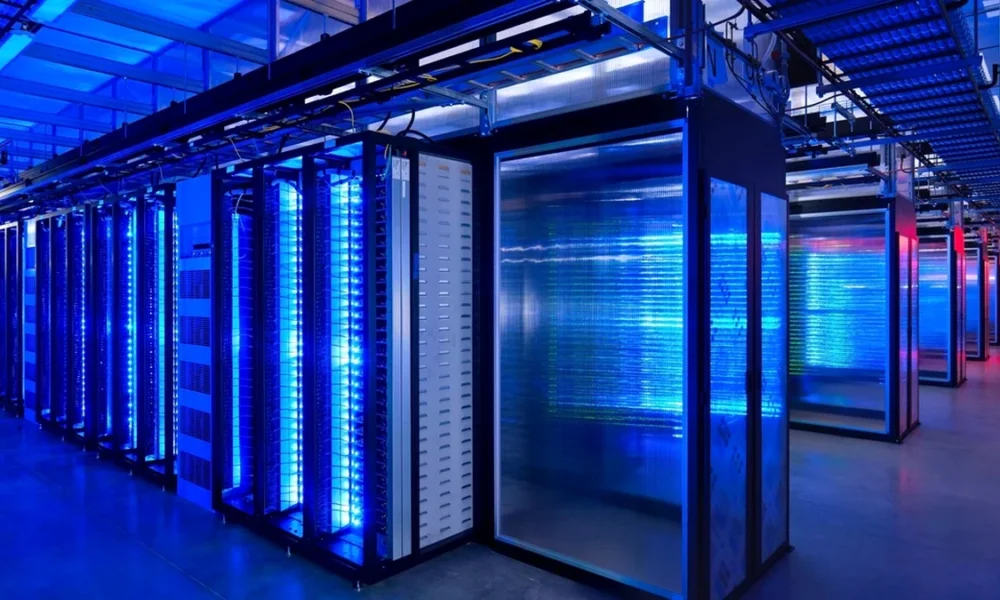
The AI boom does not feel like a normal tech trend anymore. It feels like a construction project the size of an economy.
Table Of Content
That is not just a metaphor. The International Energy Agency says there is “no AI without energy,” specifically electricity for data centers. (IEA) Goldman Sachs frames the AI build-out as a capital cycle across compute, data centers and power. (Goldman Sachs)
The money is already moving. The proof is still catching up.
That is the tension underneath the current AI market. On one side, the spending is enormous. On the other, the returns are still partly theoretical.
The market has already priced in the dream
The investor concentration is unusually high. James Bianco, citing a JPMorgan list, wrote that 41 AI-related stocks represented 8% of the S&P 500 by count but 47% of the index’s market capitalization. (James Bianco) He also wrote that those 41 stocks had accounted for 74% of the S&P 500’s total increase since ChatGPT’s November 2022 launch. (James Bianco)
That is exciting when the story is working. It is dangerous when too much of the market starts leaning on one idea.
AI has become a major engine of investor confidence. If AI companies keep growing, the market looks smart. If the returns disappoint, investors may realize they were not just buying technology. They were buying a promise.
The spending is no longer experimental
AI is expensive because it is physical. The IEA’s energy report puts the issue plainly: AI depends on electricity for data centers. (IEA)
Goldman Sachs’ baseline model puts annual AI capital expenditure at $765 billion in 2026, rising to $1.6 trillion in 2031, with roughly $7.6 trillion of cumulative capital between 2026 and 2031 across compute, data centers and power. (Goldman Sachs)
That is not startup money. That is industrial money.
The problem is timing. Data centers take time to build, power grids take time to expand, and chips remain expensive. If companies spend too aggressively before demand is fully proven, they risk building infrastructure that takes longer than expected to pay for itself.
But if they do not spend, they risk falling behind.
That is why the AI race feels so intense. Nobody wants to be the company that saved money and lost the future.
Users are showing up fast
Company adoption is moving quickly. McKinsey’s 2025 State of AI survey says 88% of respondents reported regular AI use in at least one business function, up from 78% a year earlier. (McKinsey) McKinsey’s 2023 survey found that one-third of respondents said their organizations were already using generative AI regularly in at least one business function. (McKinsey)
Consumer use is also large. OpenAI’s own usage study said ChatGPT had 700 million weekly active users, and OpenAI’s Q1 2026 update said consumer ChatGPT growth broadened across age groups and geography. (OpenAI) (OpenAI)
But usage is not the same as profit.
A person asking ChatGPT for help with an email is not automatically a profitable customer. A company experimenting with AI in a few departments is not automatically getting a return on investment. The next phase is not about whether people will try AI. They already have.
The next phase is about whether AI can save enough time, reduce enough costs, or create enough new value to justify the bill.
AI is becoming more capable, but also more expensive
The technology is improving, but the cleanest source does not support overstating the pace. METR’s public research page says the length of tasks AI agents can complete has been increasing over six years with a doubling time of around seven months. (METR)
That still matters. If AI systems can complete longer tasks, the business case moves beyond simple chatbot answers and closer to work that companies might pay more to automate.
Costs are also part of the story. OpenAI’s API pricing page lists GPT-5.5 at $5 per million input tokens and $30 per million output tokens. (OpenAI) For companies experimenting broadly, those token prices matter because small individual uses can become large aggregate costs.
That is the uncomfortable question: if everyone uses AI more, does the cost fall because the technology scales, or rise because the tasks become bigger and more demanding?
The power problem is real
AI needs data centers. Data centers need electricity. The IEA says AI depends on electricity for data centers. (IEA)
BloombergNEF says data center IT capacity under construction has topped 23 gigawatts. (BloombergNEF) JLL’s 2026 Global Data Center Outlook says nearly 100 gigawatts of new data centers will be added between 2026 and 2030, doubling global capacity. (JLL)
Those numbers are hard to picture, so think of it this way: AI is not only competing for users and developers. It is competing for land, grid connections, water, power and political approval.
A company can announce a data center faster than a city can upgrade its power infrastructure. That gap matters.
If energy supply cannot keep up, AI costs may rise. If local communities resist large data center projects, timelines stretch. If governments promise grid expansion without funding it properly, the industry’s plans start to look less certain.
The AI boom is not just a Silicon Valley story anymore. It is an infrastructure story.
The economy is leaning on the buildout
US real GDP grew 2.1% in 2025 and 1.6% at an annual rate in the first quarter of 2026. (FRED) (BEA) Harvard economist Jason Furman estimated that investment in information processing equipment and software was 4% of GDP but accounted for 92% of US GDP growth in the first half of 2025. (Jason Furman)
That means the data center boom may be doing more than helping tech stocks. It may be helping hold up the broader economy.
This is where the story becomes political.
If AI infrastructure spending slows, it may not just hurt tech companies. It could affect construction, energy, manufacturing, local tax revenue and national growth numbers.
That makes AI both powerful and fragile. The boom is supporting a lot of confidence. But confidence can reverse quickly if investors start asking whether the payoff is coming fast enough.
The real test is productivity
The promise of AI is productivity. Better tools should help workers produce more with less time and less cost.
So far, the evidence is mixed.
AI can help individual workers with writing, coding, customer support, research and internal automation. But turning individual productivity gains into company-wide profit is harder.
A chatbot that helps one employee draft a document is useful. A full AI workflow that changes how an entire business operates is much harder to build.
That is the next test.
The AI industry has already won attention. It has won users. It has won investor belief. Now it has to win the spreadsheet.
Can companies show that AI reduces costs in a measurable way? Can they prove that expensive model subscriptions are cheaper than old workflows? Can they replace scattered experiments with durable systems?
Until then, the boom remains a strange mix of real adoption and hypothetical returns.
What happens next
The AI boom is not fake. The adoption, spending and infrastructure numbers above are too large to dismiss as pure vaporware.
But it is also not guaranteed.
The market is betting that AI will become important enough to justify one of the largest infrastructure spending cycles in modern technology. That may happen. It may even happen faster than skeptics expect.
But the risk is obvious: the money is being spent now, while the returns are still arriving later.
That is the story of AI in 2026. Not a bubble exactly. Not a sure thing either.
More like a giant bridge being built in real time, with investors, governments and companies all standing on it before anyone knows exactly how much weight it can hold.


No Comment! Be the first one.