







Soft Real-Time vPAC on RHEL, KVM, and Podman: A Release Checklist
A practical release checklist for treating soft real-time vPAC deployments on Red Hat Enterprise Linux, KVM, and Podman as measured industrial edge systems rather than generic virtual machines.
A soft real-time vPAC is not just another virtual machine on an edge server. It is a promise that a power, utility, or industrial edge workload can meet an agreed timing envelope while still gaining the operational advantages of a modern Linux platform. If the team treats that promise casually, virtualization becomes a new black box rather than a way out of the old one.
Table Of Content
- Start by defining “soft real-time” as an acceptance test
- Minimum timing contract
- Do not skip the negative test
- Separate the host contract from the guest contract
- Host release gates
- Use KVM controls deliberately, not decoratively
- KVM review questions before go-live
- Keep Podman workloads out of the timing-critical path unless they are measured
- Podman release gates
- Design the update process before the first field deployment
- Update evidence checklist
- Treat AI as advisory until proven otherwise
- A production readiness checklist
- Do not release until these gates pass
- Bottom line
- Sources
That is why the new Red Hat discussion of building a soft real-time vPAC with Red Hat Enterprise Linux, KVM, and Podman is useful beyond one vendor stack. Red Hat’s own RSS summary says the power industry has long relied on proprietary “black box” appliances, that those devices create vendor lock-in, that hardware refresh cycles can last “often 20 years,” and that even cyber-security patching can become operationally heavy. It also points to renewables and AI data center demand as new pressure on the grid. The architectural lesson is clear: modernization has to reduce operational lock-in without weakening timing, safety, or auditability.
This Learning Hub checklist translates that idea into release gates for teams evaluating a RHEL, KVM, and Podman-based soft real-time vPAC platform. It is deliberately conservative. It does not claim hard real-time certification, it does not move protection decisions into AI, and it does not assume that a container or VM is safe just because it starts successfully.
Start by defining “soft real-time” as an acceptance test
The first release gate is vocabulary. “Soft real-time” should mean that missed deadlines are unacceptable for operations quality, but the workload is not being presented as a certified hard real-time trip path. If the deployment must satisfy a protection, safety, or regulatory requirement, that requirement has to come from the utility’s engineering authority and the relevant certified devices, not from a generic virtualization checklist.
The Linux kernel documentation for real-time preemption describes PREEMPT_RT as a set of real-time kernel concepts and changes compared with a non-PREEMPT_RT configuration. For a vPAC release, that should push the team toward measurement. Do not write “real-time ready” into the design because a kernel or distribution has a real-time feature. Write the latency target, the test method, the load profile, and the pass/fail threshold.
Minimum timing contract
- Deadline: the maximum acceptable response time for each vPAC function under normal and stressed conditions.
- Measurement point: where the timer starts and stops, such as field event arrival, VM interrupt handling, application processing, or outbound message publication.
- Stress profile: CPU, memory, storage, network, telemetry, patching, and failover load used during the test.
- Failure policy: what happens when the timing envelope is exceeded: alarm, fail closed, fail over, or keep running with degraded function.
- Retest trigger: which changes require a new timing test, including kernel updates, VM definition changes, container image updates, and hardware replacement.
Do not skip the negative test
A useful vPAC test does not only prove the happy path. It proves that the system fails visibly when it cannot meet the timing contract. Operators should see missed-deadline alerts, latency histograms, restart records, and a clear degraded-state signal. A system that silently gets slower under load is not ready for a soft real-time role.
Separate the host contract from the guest contract
Red Hat’s selected stack puts RHEL at the host/platform layer and KVM at the virtualization layer. The KVM project describes KVM as a full virtualization solution for Linux on x86 hardware with virtualization extensions, using kernel modules and giving each VM private virtualized hardware such as network, disk, and graphics devices. That isolation is valuable, but it is not a performance guarantee by itself.
Treat the host as a product with its own release record. The host contract should include RHEL version, kernel stream, firmware levels, CPU topology, NUMA layout, NIC driver, storage path, time synchronization design, update policy, and physical redundancy. The guest contract should include the VM operating system, virtual CPU count, memory size, virtual device model, watchdog behavior, and application release. If those contracts are mixed together, nobody can tell whether a timing regression came from the host, the hypervisor, the guest, or the application.
Host release gates
- Patchability: the platform can receive security updates without a heroic field procedure.
- Rollback: the host can return to a previously tested kernel, firmware, and hypervisor configuration.
- Core reservation: latency-sensitive vPAC guests are not competing with backups, log shipping, image pulls, or bulk analytics on the same CPUs.
- Time discipline: the design states which clock source and time-sync service each layer trusts.
- Observability: host metrics are retained beside guest and application metrics for every timing test.
Use KVM controls deliberately, not decoratively
The libvirt domain XML documentation shows why VM definitions are part of the engineering record. It documents CPU allocation, CPU tuning, memory backing, NUMA node tuning, IOThreads, and KVM domain type options. In other words, the VM definition is not a boilerplate file generated once and forgotten. It is a performance-sensitive artifact.
For a soft real-time vPAC, each KVM tuning choice should map to a measured reason. If a vCPU is pinned, write down which physical CPU it uses and why. If huge pages or locked memory are used, record the before-and-after latency evidence. If IOThreads are assigned to storage devices, prove that the change reduces jitter instead of just adding complexity. If NUMA placement matters, keep the VM memory and vCPUs on the intended node.
KVM review questions before go-live
- CPU: Are latency-sensitive vCPUs isolated from noisy host work, and is the emulator thread accounted for?
- Memory: Is the guest protected from ballooning or host memory pressure during the acceptance test?
- I/O: Are disk and network paths measured under fault and recovery conditions, not just under idle lab load?
- Definition drift: Can operations prove that the running VM definition matches the approved definition?
- Failure behavior: Does a guest hang, host reboot, or storage delay produce an operator-visible event?
Keep Podman workloads out of the timing-critical path unless they are measured
Podman can be a strong fit for supporting services around a vPAC platform: telemetry collection, protocol adapters, update agents, dashboards, model-assisted diagnostics, or local data buffering. That does not mean every control function should become a best-effort container. The release gate is simple: if a container is in the timing path, it must pass the same timing contract as the VM or application it supports.
The Podman Quadlet documentation describes systemd units using Podman Quadlet and file types such as .container, .kube, .network, .pod, and .volume. It also explains that Podman can generate regular systemd service units, which can then be managed with systemctl like other systemd services. For industrial edge systems, that is the useful pattern: containers should have a service lifecycle, dependencies, logs, resource limits, and restart behavior that operations can audit.
Podman release gates
- Lifecycle: every production container is managed by systemd or an equivalent audited service manager, not by an interactive shell command.
- Dependency order: support containers start only after required storage, network, and time services are ready.
- Resource budget: CPU, memory, and storage consumption are capped so support services cannot starve the vPAC workload.
- Image provenance: container images are signed or otherwise traceable to an approved build and vulnerability scan.
- Restart policy: repeated failures escalate to operators instead of looping forever and hiding a degraded plant state.
Design the update process before the first field deployment
The Red Hat source frames cyber-security patching as a major pain point for proprietary fixed-function devices. A virtualized vPAC platform should improve that situation, not recreate it with a different set of opaque artifacts. The update process has to be designed before the system reaches a substation or industrial site.
A practical update model uses four tracks: host updates, VM image updates, container image updates, and policy/configuration updates. Each track needs its own approval evidence and rollback path. A kernel update should not ride through on the same approval as a dashboard container. A KVM definition change should not be hidden inside an application release. A Podman image pull should not happen automatically on a critical edge node unless the organization has explicitly accepted that operational risk.
Update evidence checklist
- Before state: host version, VM definition hash, container image digests, and application versions.
- Change scope: which layer changes and which timing tests must rerun.
- Security reason: vulnerability, feature, support lifecycle, or configuration correction that justifies the change.
- Rollback proof: a tested return path to the previous known-good state.
- Operations window: who can approve, execute, monitor, and abort the change.
Treat AI as advisory until proven otherwise
The Red Hat RSS summary explicitly mentions room for new functionality or AI capabilities, and the broader grid context includes AI data center demand. That makes AI tempting at the edge. The safe starting position is narrow: AI can help summarize events, detect anomalies, draft work orders, or recommend maintenance. It should not silently change protection behavior or timing-critical control logic.
If an AI-assisted service runs near a vPAC deployment, place it in the support tier. Give it a separate Podman service lifecycle, separate credentials, separate network policy, and separate resource budget. Its output should be advisory unless a deterministic policy layer and a responsible human approval path say otherwise. The goal is to improve operator awareness without turning a soft real-time platform into an unpredictable automation loop.
A production readiness checklist
Do not release until these gates pass
- Timing contract: every soft real-time function has a measured deadline, stress profile, and failure policy.
- Layer ownership: host, KVM guest, Podman service, and application owners are named separately.
- VM definition control: libvirt/KVM settings are versioned and reviewed as engineering artifacts.
- Container lifecycle: Podman workloads are service-managed, resource-budgeted, and kept out of the timing-critical path unless measured.
- Patch model: host, VM, container, and configuration updates each have rollback evidence.
- Security boundary: support services cannot reach field or control interfaces they do not require.
- Observability: latency, restarts, missed deadlines, host pressure, and container failures are logged with enough detail for incident review.
- Field rehearsal: the team has tested reboot, failover, storage delay, network loss, container crash, VM hang, and update rollback.
Bottom line
A RHEL, KVM, and Podman stack can be a credible foundation for a soft real-time vPAC when the organization treats it as an engineered industrial platform. The win is not simply replacing a proprietary box with a virtual machine. The win is making timing, patching, isolation, lifecycle, and rollback visible enough to operate.
That visibility is the difference between modernization and another generation of black boxes. If the platform cannot produce its timing evidence, version evidence, source evidence, and rollback evidence on demand, it is not ready for a soft real-time vPAC role.
Sources
- Red Hat Blog: Building a soft real-time vPAC with Red Hat Enterprise Linux, KVM, and Podman
- Red Hat Blog RSS feed used for timestamp and source summary
- KVM project: Kernel Virtual Machine overview
- Podman documentation: systemd units using Podman Quadlet
- Linux kernel documentation: Real-time preemption
- libvirt documentation: Domain XML format
- Featured image source: MTA Capital Construction Mega Projects via Wikimedia Commons
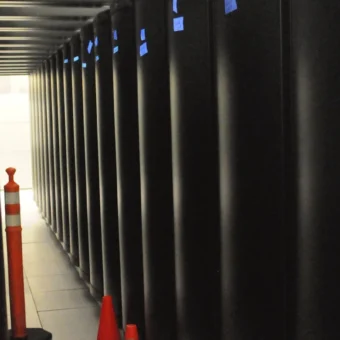
Featured image: control wires in a transformer room at a power sub-station in Queens by MTA Capital Construction Mega Projects, licensed under CC BY 2.0 via Wikimedia Commons; cropped and converted to WebP for sxz.io.



No Comment! Be the first one.