








Groq’s $650M Raise Puts AI Inference Clouds in the Spotlight
Groq says a $650 million funding round will expand its AI inference cloud, months after a non-exclusive Nvidia licensing agreement reshaped the company’s leadership and technology story.
Groq is using a new $650 million raise to turn an AI-chip reset into an inference-cloud expansion plan, sharpening the competition over where production AI workloads actually run.
Table Of Content
TechCrunch reported Monday that Groq confirmed the funding round after a December licensing deal with Nvidia moved important technology and leadership into Nvidia’s orbit. Groq’s own funding announcement frames the move more narrowly: $650 million in growth capital to expand the company’s AI inference cloud.
That distinction matters. The AI infrastructure market is no longer only about who can train the largest model. The more immediate customer problem is how to run models quickly, predictably, and cheaply once applications are in production. Groq is trying to make that inference layer its center of gravity.
Groq puts new capital behind inference, not training
Groq says the new round was led by Disruptive and Infinitum, with participation from investors that chose to reinvest. The company says the money will accelerate expansion of its global AI inference cloud and help it scale toward 200 megawatts by the end of 2027.
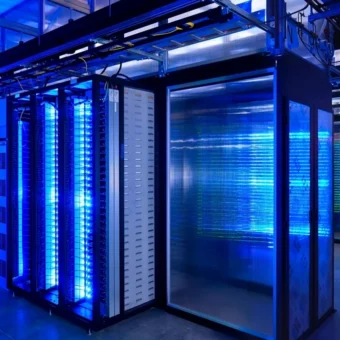
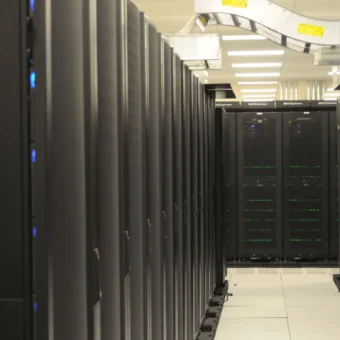
The scale claims are already substantial. Groq says it operates 13 data centers across North America, Europe, the Middle East, and APAC, serves more than five million developers and thousands of AI-native companies, and processes trillions of AI tokens each week. Those figures make the announcement more than a balance-sheet update; they are Groq’s pitch that inference has become a deployment platform in its own right.
Groq’s message is also a category argument. Training infrastructure rewards peak compute, large clusters, and long-running jobs. Inference infrastructure is judged every time an application asks a model to respond. Latency, queueing, regional capacity, price per token, model availability, and data-handling guarantees become product features, not backend details.
The Nvidia agreement reshaped the story
The funding follows Groq’s December 2025 non-exclusive licensing agreement with Nvidia. In that announcement, Groq said Nvidia licensed Groq inference technology and that Groq founder Jonathan Ross, president Sunny Madra, and other Groq team members would join Nvidia to help advance and scale the licensed technology. Groq also said it would continue operating as an independent company and that GroqCloud would continue without interruption.
TechCrunch describes the arrangement as one of the AI sector’s “not-acqui-hire” deals, where a larger company licenses technology and hires key people without acquiring the whole startup. Groq’s official language is more restrained, but the operational question is the same: what does the remaining company become after a major partner gains access to the technology and some of the people behind it?
Groq’s answer is to become an inference cloud operator. Its new announcement says Nvidia’s LPX platform incorporates Groq inference technology, while Groq is fitting out its own footprint with its latest inference technology, including Nvidia’s new LPX system. That creates a complicated but common AI-infrastructure pattern: a company can be a supplier, partner, and competitor inside the same market.
A rebuilt leadership bench points to operations
The leadership details in Groq’s announcement point toward execution rather than pure chip research. Groq says it is chaired by Alex Davis of Disruptive and led by CEO Adam Winter and CFO Matt Eng. It also names Alan Rice as chief operating officer, citing previous work at xAI and Meta Datacenters after an earlier career in U.S. Navy nuclear submarine operations.
Starting in July, Groq says Sinclair Schuller will join as chief technology officer and Rakesh Malhotra as chief product officer. The company says they previously worked together at enterprise cloud platform Apprenda, later sold to Atos, and then co-founded Nuvalence, a software-engineering and digital-transformation firm acquired by EY in 2024. Groq also notes that Malhotra previously spent roughly a decade at Microsoft leading cloud, data-center-management, and enterprise-storage products.
Those resumes fit the new strategy. If Groq’s future is an inference cloud, it needs data-center operations, capacity planning, platform product management, enterprise support, and predictable economics as much as it needs accelerator hardware.
Why inference cloud is becoming a separate fight
Groq’s GroqCloud page describes the service as an AI inference platform for developers, available in public, private, or co-cloud instances. It says the platform supports LLMs, speech-to-text, text-to-speech, and image-to-text models, with plans that range from free developer usage to enterprise deployments.
That positioning shows why the inference market is widening. Developers want fast model responses while finance teams want predictable spend. Enterprises want regional control, data-retention options, private tenancy where needed, and enough model coverage to avoid rewriting applications whenever a provider changes its catalog. A specialized inference cloud has to prove all of that at production scale.
For customers evaluating Groq, the key questions are practical: where capacity is available, which models are supported, how service tiers map to real latency, what data is retained, how private or regional endpoints are handled, and whether workloads can move if the Nvidia-linked LPX ecosystem evolves faster than Groq’s own service roadmap.
The bigger signal
Groq’s raise is a sign that investors still see room for specialized AI infrastructure companies even as Nvidia expands deeper into full-stack systems. It is also a reminder that the next phase of AI spending may be decided less by benchmark charts and more by operational details: tokens per dollar, tokens per watt, regional reliability, and the amount of engineering needed to keep applications responsive.
The company has fresh capital, an explicit inference-cloud strategy, and a leadership team built around operating infrastructure. Now it has to show that a post-licensing Groq can remain more than a chip story. It has to become a dependable place to run production AI.

No Comment! Be the first one.