






Kubernetes Device Management Turns AI Hardware Into a Scheduling Problem
Kubernetes Device Management and DRA show why GPUs, NICs, and accelerators now need explicit scheduling contracts, not just integer device counts.
Kubernetes Device Management is a signal that AI infrastructure is outgrowing the old “give this Pod two GPUs” contract. As accelerators, network devices, and edge hardware become part of ordinary platform planning, the scheduler needs to understand more than CPU, memory, and a simple integer count of devices.
Table Of Content
- The device boundary is moving
- Why AI workloads expose the gap
- The operational risk is hidden placement
- What DRA changes in the contract
- From integer devices to claims
- DeviceClasses become a platform product
- Claims make policy review easier
- Device plugins are still the baseline, but they show the limit
- The mature plugin path is intentionally simple
- That is not enough for heterogeneous accelerators
- What platform teams should evaluate now
- Start with inventory before API adoption
- Define DeviceClasses around user intent
- Keep the fallback path boring
- The takeaway for AI and edge clusters
- Sources
The Kubernetes project made that point in its June 24 spotlight on WG Device Management. The post says AI, edge, and telecommunications workloads have created requirements for allocating GPUs, TPUs, network interfaces, and other hardware, sometimes after a Pod starts and sometimes through time-sharing. Its centerpiece is Dynamic Resource Allocation, or DRA, which the blog frames as the working group’s cornerstone project.
The device boundary is moving
Kubernetes has always had a scheduling contract for CPU and memory. The resource management documentation explains that requests help the kube-scheduler decide where a Pod should run, while limits are enforced by the kubelet so the running container cannot exceed the configured amount. That model works well for common compute and memory budgets because those resources are comparatively uniform and divisible.
Specialized hardware is different. A GPU is not just a number. It has memory capacity, topology, driver expectations, health state, sharing modes, and often an interconnect story. Network accelerators, FPGAs, high-performance NICs, InfiniBand adapters, and edge devices add their own constraints. Treating all of that as a single integer hides the attributes that decide whether a workload will actually run well.
Why AI workloads expose the gap
AI training and inference jobs are especially good at finding weak infrastructure contracts. A job may need GPUs with a specific memory profile, devices that sit close enough to each other for efficient communication, or a safe way to share hardware across lower-priority inference workloads. Edge deployments can add another requirement: hardware may be scarce, remote, and tied to a particular node or location. Telecommunications workloads can also require device-level guarantees that are hard to express with only CPU, memory, and a vendor resource name.
The operational risk is hidden placement
The danger is not only failed scheduling. The harder failure mode is silent misplacement: a Pod runs, but lands on a device mix that undermines latency, throughput, isolation, or supportability. When hardware becomes part of the application contract, platform teams need the scheduler, the driver, and the workload spec to share a richer vocabulary.
What DRA changes in the contract
The Kubernetes DRA documentation lists Dynamic Resource Allocation as stable in Kubernetes v1.35 and enabled by default. It describes DRA as a way to request and share resources among Pods, often attached devices such as hardware accelerators. Device drivers and cluster administrators define the available device classes, and Kubernetes allocates matching devices to claims before placing Pods on nodes that can access them.
From integer devices to claims
The WG Device Management post describes the model in four stages. Vendors use the ResourceSlice API to advertise hardware capabilities and capacity. Users express needs such as GPU memory or interconnect requirements through the ResourceClaim API. The scheduler matches workload requirements against available hardware. Finally, the system performs the actuation step that prepares and secures the device for the Pod.
That is a very different interface from “request one accelerator.” It turns the device into a schedulable object with attributes, policy, and lifecycle hooks. For platform teams, the practical value is that the infrastructure contract can include what the workload needs, not merely how many opaque units it consumes.
DeviceClasses become a platform product
DRA also pushes administrators toward clearer device catalogs. The DRA docs say DeviceClasses let admins or device drivers define categories of devices and can use Common Expression Language filtering for specific device attributes. In a production AI cluster, that suggests a useful internal abstraction: publish classes such as cost-optimized inference, high-memory training, low-latency network-attached acceleration, or edge-only hardware, then let workload teams request a class instead of memorizing every device detail.
Claims make policy review easier
Claims also create a better review surface. Instead of asking whether a team requested an arbitrary vendor resource correctly, reviewers can ask whether the requested class, sharing mode, and placement constraints match the workload’s risk. That is easier to automate, document, and audit.
Device plugins are still the baseline, but they show the limit
DRA does not erase device plugins. The device plugin documentation describes the plugin framework as stable since Kubernetes v1.26 and intended for vendor-specific setup such as GPUs, high-performance NICs, FPGAs, InfiniBand adapters, and non-volatile main memory. Vendors can implement a plugin and deploy it manually or as a DaemonSet instead of customizing Kubernetes itself.
The mature plugin path is intentionally simple
The same documentation explains the tradeoff. After a plugin registers hardware with the kubelet, the node status can advertise available devices. Users then request those devices in a Pod spec. Extended resources are integer-only, cannot be overcommitted, and devices cannot be shared between containers. That simplicity made the model robust, but it also made it blunt.
The GPU scheduling guide shows the familiar production pattern. Administrators install GPU drivers and a vendor device plugin. The cluster exposes a custom schedulable resource such as nvidia.com/gpu or amd.com/gpu. Workloads consume GPUs the same general way they request CPU or memory, with GPU quantities specified as limits and requests equal to limits when both are set.
That is not enough for heterogeneous accelerators
For many clusters, that remains the right starting point. But it is not expressive enough for every AI or edge workload. The WG Device Management post says the legacy Device Plugin API treats devices as opaque integers: a workload can ask for two GPUs, but cannot explain which GPUs, how they should be connected, whether they can be shared, or how they should be partitioned. That is the gap DRA is trying to close.
What platform teams should evaluate now
The useful response is not to rewrite every accelerator workflow overnight. It is to treat device management as a platform capability with release gates. The table below gives a practical starting point for Kubernetes operators evaluating DRA, device plugins, or both.
| Question | Why it matters | Evidence to collect |
|---|---|---|
| Which device attributes must be schedulable? | GPU memory, topology, network attachment, health, or partitioning may decide whether the workload is viable. | Device inventory, ResourceSlice attributes, DeviceClass definitions, and workload acceptance tests. |
| Which workloads can share hardware? | DRA can model sharing, but sharing must be an explicit policy decision, not an accidental oversubscription. | Isolation requirements, performance SLOs, tenant policy, and rollback behavior for shared claims. |
| How will device health affect running jobs? | Accelerator failure can corrupt service quality even when the node itself remains alive. | Driver health reporting, scheduler events, workload retry rules, and observability dashboards. |
| What remains on the device plugin path? | Existing GPU workflows may stay on plugins while richer classes move to DRA. | Per-vendor support status, plugin DaemonSet versions, driver lifecycle, and migration criteria. |
Start with inventory before API adoption
The safest first step is not a YAML migration. It is inventory. Operators should document which accelerators exist, which nodes host them, which drivers expose them, which workloads depend on them, and which device properties are actually relevant. Without that map, a richer scheduling API only gives the platform more ways to encode guesswork.
Define DeviceClasses around user intent
DeviceClasses should not mirror every vendor SKU one-to-one unless that is what users need. A better platform design starts from workload intent: high-memory training, low-latency inference, edge camera processing, network acceleration, or cost-optimized batch. The underlying class can still select specific devices, but the public contract should be understandable to application teams.
Keep the fallback path boring
Because device plugins are mature and widely understood, they remain useful as a fallback path. A production rollout can let ordinary GPU workloads continue to use the plugin model while more demanding placements move to DRA. That reduces migration risk and gives operators a clean way to compare scheduling outcomes, utilization, and incident behavior.
The takeaway for AI and edge clusters
Kubernetes Device Management matters because it moves accelerator handling from a driver-side detail into the platform contract. CPU and memory scheduling are no longer enough for clusters that run AI, edge, and telecommunications workloads. The scheduler increasingly needs to reason about the hardware behind the resource name.
DRA gives Kubernetes a stronger vocabulary for that problem: ResourceSlices to describe device capacity, ResourceClaims to express workload needs, DeviceClasses to publish supported categories, and actuation to prepare the matched device. Device plugins still matter, but their integer resource model is no longer the full story.
For platform owners, the next step is evidence. Identify the hardware attributes that affect real workloads, define classes that users can understand, test sharing and failure behavior, and keep the existing plugin path available while DRA-based scheduling proves itself. In AI infrastructure, the accelerator is now part of the release surface.
Sources
- Kubernetes Blog: Spotlight on WG Device Management
- Kubernetes documentation: Dynamic Resource Allocation
- Kubernetes documentation: Device Plugins
- Kubernetes documentation: Schedule GPUs
- Kubernetes documentation: Resource Management for Pods and Containers
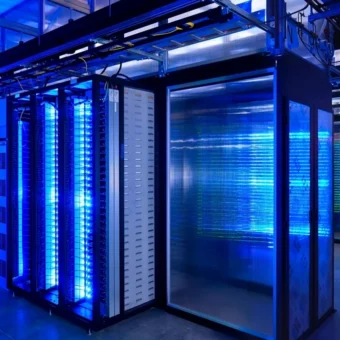
Featured image: Galileo supercomputer rack by CINECA, CC BY 2.0 via Wikimedia Commons; resized and converted to WebP.



No Comment! Be the first one.