









Google’s $40 Million Genesis Mission Bet Turns AI Vendors Into DOE Science Infrastructure
Google, Microsoft, and AWS are turning the Genesis Mission into a $150 million bet on wiring America's national labs with commercial AI tools.
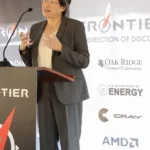
On July 22, 2026, Google announced it would commit $40 million in AI tokens and cloud credits to the U.S. Department of Energy’s Genesis Mission, the White House initiative that aims to harness artificial intelligence for scientific discovery. The pledge landed at the DOE’s Genesis Mission Summit 2026, where the Trump administration separately unveiled more than $5 billion in expanded federal commitments and named 278 research projects selected through the mission’s application process.
Table Of Content
Google was not the only company writing a check that week. Microsoft disclosed its own $60 million commitment to the same initiative, and Amazon Web Services had already pledged up to $50 million in February. Between these three companies alone, that is $150 million in cloud credits, AI tool access, and engineering time volunteered to a single government science initiative, separate from the $5 billion in federal commitments the government itself is putting on the table. The pattern is becoming clear: Genesis Mission is turning the commercial vendors that sell AI compute and models into the infrastructure layer for federal science.
What Google Is Actually Handing Over
Google’s commitment breaks into two pieces. First, the company is giving Genesis Mission awardees in-kind access to Google DeepMind’s frontier AI for science portfolio: AlphaEvolve, a Gemini-powered coding and discovery agent for designing algorithms; AlphaFold 3, which predicts protein and biomolecule structures; AlphaGenome, a tool for understanding how DNA variation shapes biology and disease; WeatherNext, a family of AI weather forecasting models; and AlphaEarth Foundations, a foundation model for mapping the planet. Second, Google is providing Gemini for Government seats and tokens for a year to tens of thousands of users across the DOE’s 17 National Laboratories, spanning operations, research, and management teams.
Google’s announcement pointed to results already showing up inside individual labs. At Pacific Northwest National Laboratory, senior scientist Dr. Henry Kvinge is using AlphaEvolve to map mathematical systems that are too complex to explore by hand. “Modern math relies on abstraction, but combinatorics offers concrete models that make complex geometry and algebra easier to grasp,” Kvinge said. “We’ve found that systems like AlphaEvolve are perfect for this search.” At the National Laboratory of the Rockies, senior materials data scientist Dr. Steven R. Spurgeon said deploying Gemini in laboratory instruments cut microscope calibration time from more than 90 minutes to about 13 minutes, an eightfold improvement, while reducing the manual steps needed to focus an image from as many as 50 down to two.
Microsoft’s Answer: a Coordination Hub Called SPARK
Microsoft’s $60 million commitment, reported by GeekWire, splits into $40 million in Azure cloud computing and AI credits spread over three years and $20 million earmarked for engineering and deployment help, aimed at getting DOE researchers actually using the tools rather than just having access to them. Microsoft is also standing up an internal group called SPARK (Scientific Partnership Advancing Research and Knowledge) to serve as the single point of contact between the company and DOE, combining program management, engineering, security, and research staff instead of leaving individual national labs to navigate Microsoft’s org chart on their own.
Microsoft said it named four initial projects taking shape under the partnership, including energy storage materials research at Pacific Northwest National Laboratory, where analysis that used to take years can now take weeks, and autonomous biosecurity threat detection work at Lawrence Livermore National Laboratory. “We move faster together,” Chris Barry, president of Microsoft’s U.S. Public Sector business, wrote in the announcement, framing the investment as both a national security imperative and an economic opportunity.
AWS made a similar bet earlier in the year. DOE recognized AWS as a Genesis Mission supporter in December, citing its work with Idaho National Laboratory on AI tools for nuclear reactor design, and in February AWS launched its own Genesis Accelerator Initiative, offering up to $50 million in cloud credits for DOE-related research over three years.
How the Government Side of the Ledger Got This Big
The Genesis Mission itself is less than a year old. President Trump created it through an executive order in November 2025, directing DOE to build a single computing and data platform, since named the American Science and Security Platform, that connects the national labs’ supercomputers, AI tools, and scientific datasets. The following month, DOE signed memorandums of understanding with 24 organizations, including Accenture, AMD, Anthropic, Amazon Web Services, Google, Microsoft, NVIDIA, OpenAI, Oracle, IBM, and Palantir, to collaborate on Genesis Mission activities. DOE’s Under Secretary for Science and Genesis Mission Director, Dr. Darío Gil, said at the time that the agreements would “help advance President Trump’s Executive Order to build the national AI platform for scientific discovery and uplift the entire U.S. R&D ecosystem.” DOE also specified that any products built under these agreements had to be architecture-agnostic, a hedge against any single vendor’s platform becoming a mandatory dependency.
What changed on July 22 was scale. The White House said the Genesis Mission has grown into a whole-of-government effort spanning more than 15 federal agencies, including the Department of Health and Human Services, the National Institutes of Health, and the Department of the Interior, all contributing research awards, funding, datasets, or facilities to a new set of National Science and Technology Challenges built on the American Science and Security Platform. DOE separately selected 278 research projects at the summit. “The 278 projects selected today represent the very best of our nation’s scientific enterprise,” said Energy Secretary Chris Wright. NIH Director Dr. Jay Bhattacharya said patients living with cancer, chronic disease, and rare conditions “cannot afford to wait decades for scientific discoveries to reach them,” and White House Office of Science and Technology Policy Director Michael Kratsios framed the moment in historical terms: “America’s greatest scientific achievements have been born of national mobilizations paired with the construction of new institutions. The Genesis Mission is the next chapter in that tradition.”
From Non-Binding Interest to Named Infrastructure
The gap between December and July is the real story here. The original 24-organization roster was a list of companies expressing interest in collaborating, structured as MOUs with no dollar figures or named projects attached. Seven months later, at least three of those companies have converted that interest into dated, dollar-denominated commitments tied to specific national laboratories, in Microsoft’s case backed by a named internal team built just to manage the relationship. That is a meaningfully different kind of commitment than signing a memorandum of understanding, and it suggests DOE used the July summit deliberately as a forcing function to convert soft partner interest into named deliverables.
It also raises the question DOE’s own architecture-agnostic requirement is trying to answer in advance: what happens to a national lab’s workflow once the free tokens, credits, and engineering hours run out? Microsoft’s cloud-credit commitment is explicitly bounded at three years. Google’s Gemini for Government seats are funded for one year. None of the public announcements describe what happens to a lab’s AI-dependent research pipeline once the in-kind period ends, or whether DOE has budgeted to pick up the commercial rate afterward. For a mission whose stated goal is to accelerate the pace of American scientific discovery, the more interesting test will not be this week’s headline dollar figures. It will be whether the 278 newly funded projects, and the labs Microsoft and Google specifically named, are still running on these tools once the introductory pricing expires.





No Comment! Be the first one.