






TRENDING
The sun setting over the sea behind a pyramid-shaped stone monument at Cape Soya, the northernmost point of Japan
November 23, 2026
How to Retire an API Endpoint in FastAPI: Send Deprecation and Sunset Headers, Find the Clients Still Calling It, Schedule Brownouts, and Block an Early Removal With oasdiff
Brass sextant in an open wooden case inside a museum display, an instrument for measuring the angle to the horizon
November 23, 2026
MIT Technology Review’s “Most Misunderstood Graph” Update Reports METR’s Judgment Findings Mostly Fairly, but It Never Says Each Point Is a 50% Success Rate or Gives the New 3.6-Month Doubling Time and 2.1 to 4.9 Month Range, and It Credits OpenAI With a Comparison METR Built
Brass telescope on a wooden tripod inside a white observatory dome with the roof slit open to the sky
November 23, 2026
Rackspace Says Leaked Credentials Let an Intruder Act as Legitimate Users in Some Spot Customer Organizations and Reach Their Kubernetes Secrets, a Platform9 Co-Founder Names a Breached Observability System as the Root Cause, and the Status Page Says Only “System Maintenance Operations”
A person sweeping a metal detector across a wet sandy beach with a sea fort on the horizon
November 23, 2026
How to Write YARA Rules With YARA-X to Hunt Malicious Python .pth Startup Files and Measure False Positives Before You Trust Them
A peeling black-and-white metal door standing ajar, with a dark empty hall and bright windows beyond
November 23, 2026
AWS’s “Found a Zero-Day on Their Own” Post Never Names the Product; the Advisory Behind Its Link Shows a Server That Ships With No Login, a README Now Saying Keep It Off the Internet, and a Fix Merged October 19 That PyPI and Docker Hub Still Do Not Carry
23 Nov 2026
SXZ.io SXZ.io
  • Home
Search the Site
Popular Searches:
Technology Amazon AI
Recent Posts
A chalkboard covered with handwritten equations and a boxed inequality, standing for a mathematical proof
How to Prove a Rust Function Correct With Verus: Write a Spec, Read the Prover’s Errors, and Find the Bugs Tests Miss
November 22, 2026
Wooden folding rule showing a Burgos-inch scale above a centimetre scale, resting on a stone beside a lake
OpenAI’s Perplexity Proposal Turns One Internal Chart Into a Candidate Industry Limit, but Its “Cybersecurity Expert” Label Sits at 0.828, Not Below 0.8, the Millennium Prize Label Rides a November Release for a September Result, and on Open Models Per-Token Loss Hides a 2.25x Compression Gap
November 22, 2026
A fallstreak hole, a round gap punched through a layer of thin cloud, with deep blue sky showing inside it, a tree on the right and a rooftop edge at the bottom left
GL.iNet Replaced Its Advice to Factory-Reset Every Router and KVM With a Check for One Process, but a 199-Router Survey Found That Process on None, and Sunday’s First Stable Fixes Left Out the Slate AX Model With Most of the Root Shells
November 22, 2026
SXZ.io SXZ.io
  • Home

Categories

Articles 311 Posts
News 317 Posts
Learning Hub 283 Posts
Home/News/Nvidia Details Vera CPU’s Custom Olympus Cores in a Direct Challenge to Intel and AMD
News

Nvidia Details Vera CPU’s Custom Olympus Cores in a Direct Challenge to Intel and AMD

Nvidia has detailed the custom Olympus cores inside its standalone Vera CPU, a direct challenge to Intel and AMD in the datacenter, with Meta, Oracle, and Alibaba already signed on.

August 1, 2026 4 Min Read
79

Nvidia has published new architectural detail on Vera, the custom Arm processor it is selling as a standalone datacenter CPU, independent of any GPU purchase. The disclosure, covered in depth by The Register on August 1, centers on Olympus, the custom core design Nvidia built specifically for Vera rather than licensing an off the shelf Arm core as it did for its earlier Grace CPU.

Table Of Content

  • A Monolithic Core Surrounded by Chiplets
  • Built for Agents, Not Just for Babysitting GPUs
  • Spatial Multithreading, Not Hyperthreading
  • How Custom Is “Custom”

Vera is the CPU half of the Vera Rubin platform generation Nvidia has been rolling out through 2026, but it can now be bought and deployed on its own, without an accompanying Rubin GPU order. That distinction is central to why the chip is being read as Nvidia’s most direct move yet into a datacenter CPU market long split between Intel and AMD. According to Nvidia’s own launch announcement, Alibaba Cloud, ByteDance, Meta, Oracle Cloud Infrastructure, CoreWeave, Lambda, Nebius, and Nscale have all signed on to deploy Vera, with Cloudflare, Crusoe, Together.AI, and Vultr named as planning to follow. “The CPU is no longer simply supporting the model; it’s driving it,” Nvidia founder and CEO Jensen Huang said in the announcement.

A Monolithic Core Surrounded by Chiplets

Unlike the multi-die chiplet designs used by x86 rivals, such as AMD’s Epyc processors, Nvidia packed all 88 Olympus cores onto a single monolithic compute die that The Register reports is fabricated on TSMC’s 3nm process. Surrounding that die are separate chiplets for memory and I/O: eight LPDDR5X memory controllers and what The Register describes as two dedicated I/O dies, one handling PCIe 6.4 and CXL 3.1 and the other dedicated to Nvidia’s NVLink Chip-to-Chip interface. Nvidia’s own engineering blog says the split is meant to deliver “strong single-thread performance, even when the socket is fully loaded.”

Each Vera CPU carries 176 threads (88 cores times two, via what Nvidia calls Spatial Multithreading), 164MB of shared L3 cache, and up to 1.5TB of SOCAMM2 LPDDR5X memory delivering 1.2TB/s of bandwidth per chip, up from 512GB/s of bandwidth and 480GB of capacity on Grace, according to specifications ServeTheHome gathered from Nvidia’s whitepaper. Configurable TDP ranges from 250W to 450W, per the same source.

In its dual-socket configuration, which Nvidia calls the Vera CPU Superchip and unveiled at GTC in March, two Vera chips connect over a 1.8TB/s NVLink-C2C link for a combined 176 cores, 352 threads, and 2.4TB/s of aggregate memory bandwidth, roughly twice the memory bandwidth of AMD’s 2024-era Turin Epyc processors, The Register reported. Nvidia’s agentic AI reference rack designs call for packing as many as 128 of these Superchips (256 CPUs total) into a single liquid-cooled rack, for a combined 22,528 cores and 384TB of memory.

Built for Agents, Not Just for Babysitting GPUs

Nvidia is positioning Vera for two distinct jobs: as the head node that manages GPUs inside its Vera Rubin rack systems, and as a host for AI agents themselves, which, unlike the large language models that power them, do not run directly on GPUs, The Register noted. Nvidia’s developer blog says agent workloads specifically need “sufficient memory bandwidth per core” and “predictable latency under concurrency,” the design goals it says shaped Olympus.

Inside each Olympus core, Nvidia built a 10-wide decoder capable of pulling up to 16 instructions into a 48-entry decode queue per cycle, backed by a 64KB instruction cache and a 96KB data cache, according to ServeTheHome’s review of the whitepaper. The Register’s own breakdown of the core’s block diagram lists eight integer ALUs, six vector and floating point pipelines using Arm’s SVE 128 extension, four load units, and two store units, a wider front and back end than the Zen 5 cores in AMD’s Turin Epyc chips or the Redwood Cove cores in Intel’s Granite Rapids Xeons. Nvidia also built a custom neural branch predictor into Olympus that can explore two branches simultaneously, predicting two code paths per clock cycle, per The Register’s analysis of the design.

Spatial Multithreading, Not Hyperthreading

For multithreading, Nvidia skipped the conventional simultaneous multithreading that Intel calls Hyperthreading. The Register describes Olympus’s approach, which Nvidia markets as Spatial Multithreading, as closer to splitting one core into two smaller ones that share a cache line: operators can run one core as a single fast thread or as two independent, lower-throughput threads, a tradeoff The Register compares to Nvidia’s own Multi-Instance GPU partitioning on its data center GPUs.

How Custom Is “Custom”

The Register calls Olympus Nvidia’s first fully custom CPU core, but its own analysis pushes back on how custom the design really is, noting that Olympus’s block diagram closely resembles a heavily modified version of Arm’s off the shelf Cortex X925 core, and that the design still leans on existing Arm intellectual property. Nvidia’s Grace CPU, by comparison, used unmodified Arm Neoverse V2, Neoverse V3, or Cortex X925 and A725 cores depending on the product variant, rather than a ground-up custom design.

Nvidia is backing Vera with a specific technical performance claim: up to 1.8 times the performance of x86 CPUs on agentic workloads, based on internal SPEC CPU 2026 testing the company ran in July, according to its developer blog. That figure comes from Nvidia’s own internal testing rather than an independent lab. As Vera reaches the hyperscalers that have signed on, independently run SPEC CPU 2026 scores, not Nvidia’s own whitepaper, will be the real test of how much of the standalone server CPU market the chip can take from Intel and AMD.


Tags:

AI ChipsArm ServersNVIDIASemiconductors

Share

Manual railway switch levers beside diverging tracks, representing routing prompts to different AI models by complexity tier
Previous Post

How to Build a Multi-Tier LLM Router With Automatic Fallback Using Python and Ollama

Two U.S. Air Force postal clerks sort packages on a warehouse conveyor belt, a physical stand-in for a work queue backlog
Next Post

KEDA Turns Kubernetes Autoscaling Into a Queue-Depth Problem

No Comment! Be the first one.

Leave a Reply Cancel reply

Your email address will not be published. Required fields are marked *

Latest
22 Nov
How to Prove a Rust Function Correct With Verus: Write a Spec, Read the Prover’s Errors, and Find the Bugs Tests Miss
22 Nov
OpenAI’s Perplexity Proposal Turns One Internal Chart Into a Candidate Industry Limit, but Its “Cybersecurity Expert” Label Sits at 0.828, Not Below 0.8, the Millennium Prize Label Rides a November Release for a September Result, and on Open Models Per-Token Loss Hides a 2.25x Compression Gap
Trending
November 22, 2026
How to Prove a Rust Function Correct With Verus: Write a Spec, Read the Prover’s Errors, and Find the Bugs Tests Miss
November 22, 2026
OpenAI’s Perplexity Proposal Turns One Internal Chart Into a Candidate Industry Limit, but Its “Cybersecurity Expert” Label Sits at 0.828, Not Below 0.8, the Millennium Prize Label Rides a November Release for a September Result, and on Open Models Per-Token Loss Hides a 2.25x Compression Gap
November 22, 2026
GL.iNet Replaced Its Advice to Factory-Reset Every Router and KVM With a Check for One Process, but a 199-Router Survey Found That Process on None, and Sunday’s First Stable Fixes Left Out the Slate AX Model With Most of the Root Shells
November 22, 2026
How to Retire an API Endpoint in FastAPI: Send Deprecation and Sunset Headers, Find the Clients Still Calling It, Schedule Brownouts, and Block an Early Removal With oasdiff
November 22, 2026
MIT Technology Review’s “Most Misunderstood Graph” Update Reports METR’s Judgment Findings Mostly Fairly, but It Never Says Each Point Is a 50% Success Rate or Gives the New 3.6-Month Doubling Time and 2.1 to 4.9 Month Range, and It Credits OpenAI With a Comparison METR Built
November 22, 2026
Rackspace Says Leaked Credentials Let an Intruder Act as Legitimate Users in Some Spot Customer Organizations and Reach Their Kubernetes Secrets, a Platform9 Co-Founder Names a Breached Observability System as the Root Cause, and the Status Page Says Only “System Maintenance Operations”

Related Posts

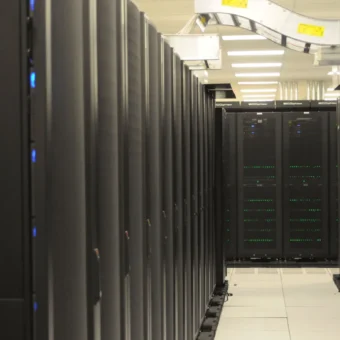
Rows of server racks in a data center representing network infrastructure targeted by botnets
News

C0XMO Botnet Shows Why Old Router Firmware Still Matters

June 7, 2026
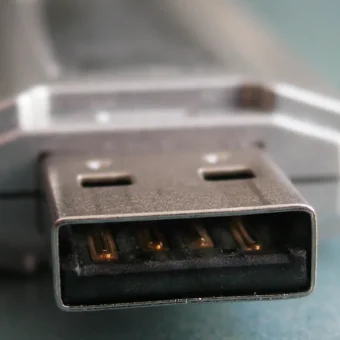
Close-up of a USB flash drive, representing physical data-theft risk in office security incidents
News

Fake IT Support Is Now Walking Through the Front Door

June 7, 2026
A phone security app on a smartphone resting on a laptop keyboard.
News

Everest Forms Pro Flaw Is Being Exploited to Create Rogue WordPress Admins

June 7, 2026
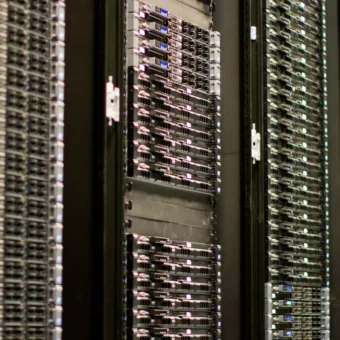
Rows of server racks in a data center, illustrating the infrastructure behind frontier AI funding.
Articles

AI’s Biggest Backers Are Hedging the Frontier Model Race

June 8, 2026
SXZ.io SXZ.io
  • [email protected]

Categories

Articles
Learning Hub
News

All Rights Reserved by SXZ.io ©2026