








TRENDING
The sun setting over the sea behind a pyramid-shaped stone monument at Cape Soya, the northernmost point of Japan
November 23, 2026
How to Retire an API Endpoint in FastAPI: Send Deprecation and Sunset Headers, Find the Clients Still Calling It, Schedule Brownouts, and Block an Early Removal With oasdiff
Brass sextant in an open wooden case inside a museum display, an instrument for measuring the angle to the horizon
November 23, 2026
MIT Technology Review’s “Most Misunderstood Graph” Update Reports METR’s Judgment Findings Mostly Fairly, but It Never Says Each Point Is a 50% Success Rate or Gives the New 3.6-Month Doubling Time and 2.1 to 4.9 Month Range, and It Credits OpenAI With a Comparison METR Built
Brass telescope on a wooden tripod inside a white observatory dome with the roof slit open to the sky
November 23, 2026
Rackspace Says Leaked Credentials Let an Intruder Act as Legitimate Users in Some Spot Customer Organizations and Reach Their Kubernetes Secrets, a Platform9 Co-Founder Names a Breached Observability System as the Root Cause, and the Status Page Says Only “System Maintenance Operations”
A person sweeping a metal detector across a wet sandy beach with a sea fort on the horizon
November 23, 2026
How to Write YARA Rules With YARA-X to Hunt Malicious Python .pth Startup Files and Measure False Positives Before You Trust Them
A peeling black-and-white metal door standing ajar, with a dark empty hall and bright windows beyond
November 23, 2026
AWS’s “Found a Zero-Day on Their Own” Post Never Names the Product; the Advisory Behind Its Link Shows a Server That Ships With No Login, a README Now Saying Keep It Off the Internet, and a Fix Merged October 19 That PyPI and Docker Hub Still Do Not Carry
23 Nov 2026
SXZ.io SXZ.io
  • Home
Search the Site
Popular Searches:
Technology Amazon AI
Recent Posts
A chalkboard covered with handwritten equations and a boxed inequality, standing for a mathematical proof
How to Prove a Rust Function Correct With Verus: Write a Spec, Read the Prover’s Errors, and Find the Bugs Tests Miss
November 22, 2026
Wooden folding rule showing a Burgos-inch scale above a centimetre scale, resting on a stone beside a lake
OpenAI’s Perplexity Proposal Turns One Internal Chart Into a Candidate Industry Limit, but Its “Cybersecurity Expert” Label Sits at 0.828, Not Below 0.8, the Millennium Prize Label Rides a November Release for a September Result, and on Open Models Per-Token Loss Hides a 2.25x Compression Gap
November 22, 2026
A fallstreak hole, a round gap punched through a layer of thin cloud, with deep blue sky showing inside it, a tree on the right and a rooftop edge at the bottom left
GL.iNet Replaced Its Advice to Factory-Reset Every Router and KVM With a Check for One Process, but a 199-Router Survey Found That Process on None, and Sunday’s First Stable Fixes Left Out the Slate AX Model With Most of the Root Shells
November 22, 2026
SXZ.io SXZ.io
  • Home

Categories

Articles 311 Posts
News 317 Posts
Learning Hub 283 Posts
Home/News/Tensordyne Bets Log Math Can Cut AI Inference Power
News

Tensordyne Bets Log Math Can Cut AI Inference Power

Tensordyne has taped out Napier, an AI accelerator that uses logarithmic approximations to chase better tokens per watt. The hard part is shipping a full software and rack-scale system.

June 19, 2026 4 Min Read
86

Tensordyne is pitching a new AI accelerator around a simple but risky idea: replace some of the multiplication-heavy math behind inference with logarithmic approximations, then prove the gains at rack scale.

Table Of Content

  • What Tensordyne says it built
  • Napier’s published specs
  • The rack-scale bet
  • The Nvidia comparison needs caution
  • Software may decide the outcome
  • Why that matters to AI operators
  • What to watch next
  • Independent benchmarks and shipping dates
  • Why this is still worth watching
  • Sources

The Register reported on June 19 that the AI infrastructure startup has taped out its first commercial chip, Napier, with fabrication under way on TSMC’s 3nm process. The company says the accelerator is designed to cut power consumption for matrix-heavy AI workloads by using logarithms and correction logic rather than conventional multiply-accumulate units alone.

That makes the announcement more than another chip-startup spec sheet. AI infrastructure buyers are now judging accelerators on tokens per watt, software compatibility, memory bandwidth, and deployment fit inside real data centers. Tensordyne is claiming progress on all four, but the evidence still has to move from company claims to shipped systems and customer workloads.

What Tensordyne says it built

The core claim is that Napier changes how common AI math is executed. In conventional arithmetic, multiplication is more expensive than addition. In logarithmic form, multiplication can be represented as an addition problem. The Register says Tensordyne is using a Mitchell approximation for log and antilog operations, then adding section-wise correction hardware to recover enough accuracy for AI workloads.

Napier’s published specs

According to the report, Napier is a 300-watt accelerator with 144 GB of HBM3e memory, 4.7 TB/s of memory bandwidth, and up to 2.1 petaFLOPS of dense FP8 performance. It also supports FP8 and 4-bit block floating formats. Those numbers place the chip in the same conversation as established data-center GPUs, but they do not prove real-world model throughput by themselves.

NVIDIA’s own H200 materials frame HBM3e memory as a key part of generative AI and high-performance computing performance, which is why Tensordyne’s memory configuration matters. The harder comparison is not raw memory capacity; it is whether a new arithmetic approach can maintain accuracy, compiler reliability, and serving performance on production models.

The rack-scale bet

Tensordyne is not positioning Napier as a one-chip curiosity. The Register says the startup’s TDN72 system will pack 72 Napier accelerators into eight air-cooled compute blades, each paired with a 10-core Intel Xeon-D host CPU, and will use a proprietary interconnect fabric with switch hardware developed with Juniper. The reported rack-scale system is a 30 kW design.

The Nvidia comparison needs caution

Tensordyne claims its rack systems can deliver up to 17 times more tokens per watt and 13 times higher throughput than NVIDIA Blackwell systems. Those are attention-grabbing figures, but they should be read as vendor claims until independent benchmarks, model mixes, and deployment constraints are public.

The reference point is formidable. NVIDIA describes the GB200 NVL72 as a rack-scale, liquid-cooled Blackwell design connecting 36 Grace CPUs and 72 Blackwell GPUs into a 72-GPU NVLink domain for trillion-parameter inference and training. Tensordyne’s pitch is that air-cooled, lower-power systems may be easier to deploy in older facilities. The open question is whether that operational advantage survives contact with real workloads and software integration.

Software may decide the outcome

Novel accelerator ideas often fail less because the math is uninteresting and more because the software ecosystem is not ready. Tensordyne says its compiler can convert existing models for Napier and that it has a proprietary serving platform plus a runtime meant to work with preferred inference servers. The Register says vLLM support is part of that story, while PyTorch support is still under development.

Why that matters to AI operators

Infrastructure teams do not buy accelerators in isolation. They buy a stack: model conversion, kernel coverage, orchestration, observability, failure handling, vendor support, and a path back to mainstream frameworks when something breaks. If a Napier deployment requires too many model-specific exceptions, any power advantage could be consumed by engineering cost.

That is especially important for inference fleets, where operators care about latency percentiles, batching behavior, quantization accuracy, and per-token cost under changing demand. Tensordyne’s arithmetic could matter if it preserves model quality while lowering energy per token. If it requires heavy tuning for each workload, buyers may wait for larger proof points.

What to watch next

Independent benchmarks and shipping dates

The Register says TDN72 is expected next year and that Napier is slated for release in the second or third quarter of 2027. Between now and then, the useful signals will be independent inference benchmarks, named cloud or enterprise deployments, software compatibility matrices, and customer evidence across more than one model family.

There is also a competitive timing problem. By 2027, Tensordyne will be fighting the systems NVIDIA, AMD, and hyperscale custom silicon teams are shipping then, not the systems they shipped when Napier was taped out. A better tokens-per-watt story is valuable only if the surrounding rack, software, and supply chain arrive before the target moves again.

Why this is still worth watching

Even with the caveats, Tensordyne’s announcement highlights an important shift in AI infrastructure. The next wave of competition is not only about bigger GPUs. It is about changing the math path, the cooling envelope, the interconnect design, and the software layer to reduce the cost of inference. If Napier works as advertised, it could widen the design space for AI accelerators. If it does not, it will still show how hard it is to compete with a full-stack incumbent in the AI data center.

Sources

  • The Register: Tensordyne makes a big bet on log math to beat Nvidia
  • NVIDIA H200 GPU product page
  • NVIDIA GB200 NVL72 product page
  • vLLM documentation
  • Featured image source: Semiconductor Wafer of Microelectronics on Wikimedia Commons

Featured image: a 12-inch wafer of microelectronic testbeds photographed by DrHughManning, licensed under CC BY-SA 4.0; resized and converted to WebP for sxz.io.

Tags:

AI AcceleratorsAI InfrastructureData CenterNVIDIASemiconductorsTensordyne

Share

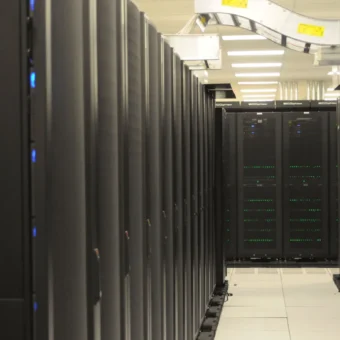
Rows of data center server racks, representing AI agent deployments moving from temporary preview accounts to production cloud infrastructure
Previous Post

Cloudflare’s Temporary Accounts Turn AI Agents Into Deployers

Students learning to type on laptop computers, representing structured AI and LLM training for engineering teams
Next Post

IEEE’s LLM Course Shows AI Training Is Now Engineering Infrastructure

No Comment! Be the first one.

Leave a Reply Cancel reply

Your email address will not be published. Required fields are marked *

Latest
22 Nov
How to Prove a Rust Function Correct With Verus: Write a Spec, Read the Prover’s Errors, and Find the Bugs Tests Miss
22 Nov
OpenAI’s Perplexity Proposal Turns One Internal Chart Into a Candidate Industry Limit, but Its “Cybersecurity Expert” Label Sits at 0.828, Not Below 0.8, the Millennium Prize Label Rides a November Release for a September Result, and on Open Models Per-Token Loss Hides a 2.25x Compression Gap
Trending
November 22, 2026
How to Prove a Rust Function Correct With Verus: Write a Spec, Read the Prover’s Errors, and Find the Bugs Tests Miss
November 22, 2026
OpenAI’s Perplexity Proposal Turns One Internal Chart Into a Candidate Industry Limit, but Its “Cybersecurity Expert” Label Sits at 0.828, Not Below 0.8, the Millennium Prize Label Rides a November Release for a September Result, and on Open Models Per-Token Loss Hides a 2.25x Compression Gap
November 22, 2026
GL.iNet Replaced Its Advice to Factory-Reset Every Router and KVM With a Check for One Process, but a 199-Router Survey Found That Process on None, and Sunday’s First Stable Fixes Left Out the Slate AX Model With Most of the Root Shells
November 22, 2026
How to Retire an API Endpoint in FastAPI: Send Deprecation and Sunset Headers, Find the Clients Still Calling It, Schedule Brownouts, and Block an Early Removal With oasdiff
November 22, 2026
MIT Technology Review’s “Most Misunderstood Graph” Update Reports METR’s Judgment Findings Mostly Fairly, but It Never Says Each Point Is a 50% Success Rate or Gives the New 3.6-Month Doubling Time and 2.1 to 4.9 Month Range, and It Credits OpenAI With a Comparison METR Built
November 22, 2026
Rackspace Says Leaked Credentials Let an Intruder Act as Legitimate Users in Some Spot Customer Organizations and Reach Their Kubernetes Secrets, a Platform9 Co-Founder Names a Breached Observability System as the Root Cause, and the Status Page Says Only “System Maintenance Operations”

Related Posts

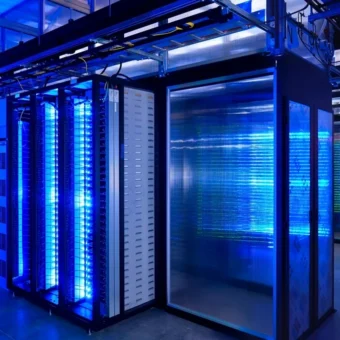
Blue-lit server racks in a modern data center, illustrating the compute infrastructure behind the AI boom.
Articles

The AI Boom Is Spending Real Money Before Proving Real Returns

June 7, 2026
Rows of server racks in a data center representing network infrastructure targeted by botnets
News

C0XMO Botnet Shows Why Old Router Firmware Still Matters

June 7, 2026
Close-up of a USB flash drive, representing physical data-theft risk in office security incidents
News

Fake IT Support Is Now Walking Through the Front Door

June 7, 2026
A phone security app on a smartphone resting on a laptop keyboard.
News

Everest Forms Pro Flaw Is Being Exploited to Create Rogue WordPress Admins

June 7, 2026
SXZ.io SXZ.io
  • [email protected]

Categories

Articles
Learning Hub
News

All Rights Reserved by SXZ.io ©2026